
It’s well into Summer, not only does that mean warm skies and beach holidays, but it also means that it’s that time of year to celebrate LGBTQ+ pride. As far as representation goes, Nintendo has been a mixed bag (or Adventure Pouch) of sorts.
Representation is important for communities like ours; validating our existence can go a long way. Today, I will explore some of the different ways Nintendo has provided some form of LGBTQ+ representation within its games and media. Though some of it is good, it is also essential to talk about the bad to see what went wrong and potentially discuss what could’ve improved.
Please note that I originally started writing this article several years ago as a personal project.

Super Mario Series
Let’s begin with the series that really put Nintendo on the map: Super Mario. Birdo was originally introduced in 1988 as a boss in Super Mario Bros. 2. Not only is she transgender, but she very well may be one of the earliest examples of trans representation in gaming history. According to the official game manual:
“Birdo thinks he is a girl and likes to be called Birdetta. He likes to wear a bow on his head and shoot eggs from his mouth”
Unfortunately, aside from the misgendering, it seems Nintendo is still unsure on the gender of Birdo, as evident from various other game manuals/menus. Games such as the English version of Mario Tennis and Super Smash Bros. Melee depict Birdo as female, yet the English version of Mario Kart: Double Dash depicts Birdo as male. Perhaps Birdo officially came out as trans sometime between Super Mario Bros. 2 and Super Smash Bros. Melee? If that were the case, though, then Nintendo were being very naughty by misgendering her in Double Dash! On the other hand, there is a theory that Birdo’s gender was just the result of a simple typo when localising the game to English, but I much prefer the idea of the former (aside from the misgendering).
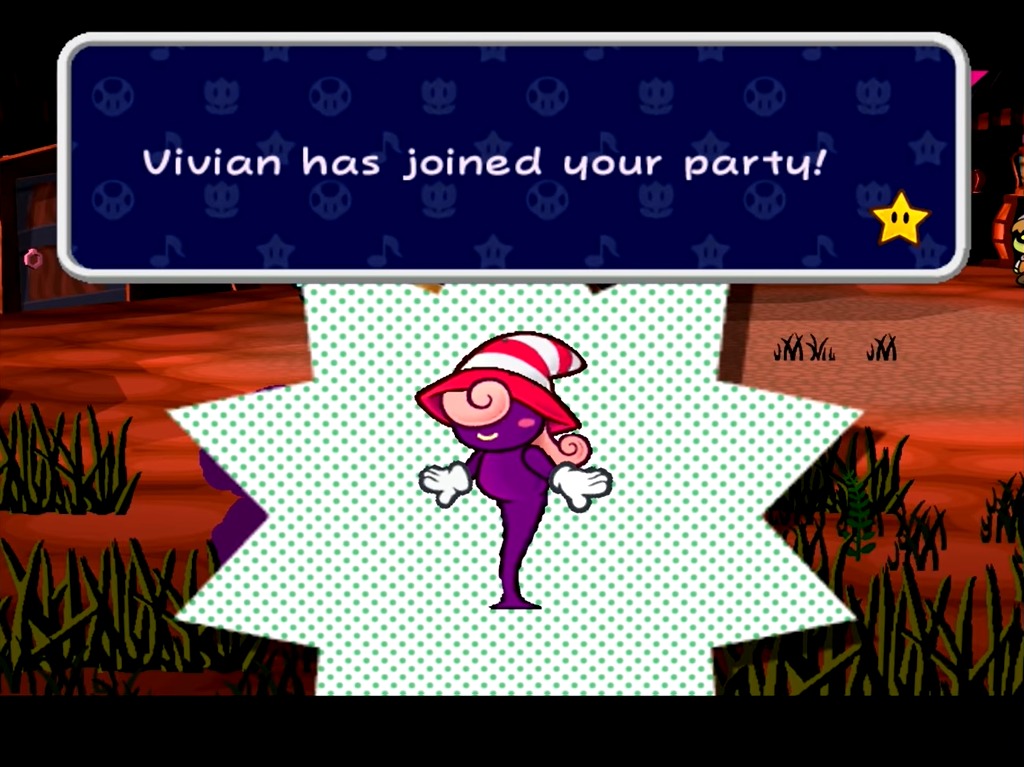
Although a lesser-known character, Vivian is officially transgender… though, prior to its HD remake, only in versions of Paper Mario: The Thousand-Year Door that were not localised to English. Respectively, the party member description and Goombella’s Tattle roughly translates from Japanese to English as:
‘One of the shadow group, Vivian appears to be a girl but is really a boy.’
and
‘That’s Vivian, Of the shadow group, she’s the youngest sister… er, brother.’
In addition to these references to her gender identity, Vivian’s sisters also insult her through misgendering.

Any version that was translated to English, however, only refers to Vivian as a sister; omitting any relation to potentially being trans. As awesome as it would be if the localisation team had intended that Vivian is trans, it is unfortunately more than likely they just decided that she would be female, erasing any notion that she could be trans… essentially trans erasure.
Thankfully, the HD remake seems to have provided an opportunity for redemption, finally affirming Vivian’s gender identity. Perhaps my assumptions of the original localisation team were wrong. While travelling with Mario in Chapter 4, Vivian confides with you, saying, “Truth is, it took me a while to realise I was their sister… not their brother. Now their usual bullying feels heavier.”

The Legend of Zelda Series
Though several Zelda characters have been debated whether or not they are LGBT, Nintendo has unfortunately shot a lot of the theories down, such as the carpenters from Ocarina of Time, or Tingle from Majora’s Mask. In our defence, Nintendo has made quite a lot of ‘quirky’ characters throughout the franchise’s thirty-five-year run.
One character from Breath of the Wild, however, seems like they could definitely come from an LGBTQ+ background: Bolson. He shares traits similar to those of the carpenters from Ocarina of Time. Other than being a carpenter himself, he also dresses and speaks rather effeminately. This stereotypical trait itself doesn’t confirm whether the character is gay (or lands somewhere else in the LGBTQ+ community), rather some of his interactions with Link does support the theory… more specifically when he gets excited seeing Link without a shirt and calls him ‘perky’.
Personally, as a gay person myself, I don’t mind this sort of inclusion, it’s honestly quite hilarious to watch, though I do understand how it can also be damaging to our representation. Do bear in mind that the only signifying factor on whether a Zelda character could be gay always seems to stem from similar stereotypes… though, to be fair, a lot of different characters seem to share some of these ‘quirks’.
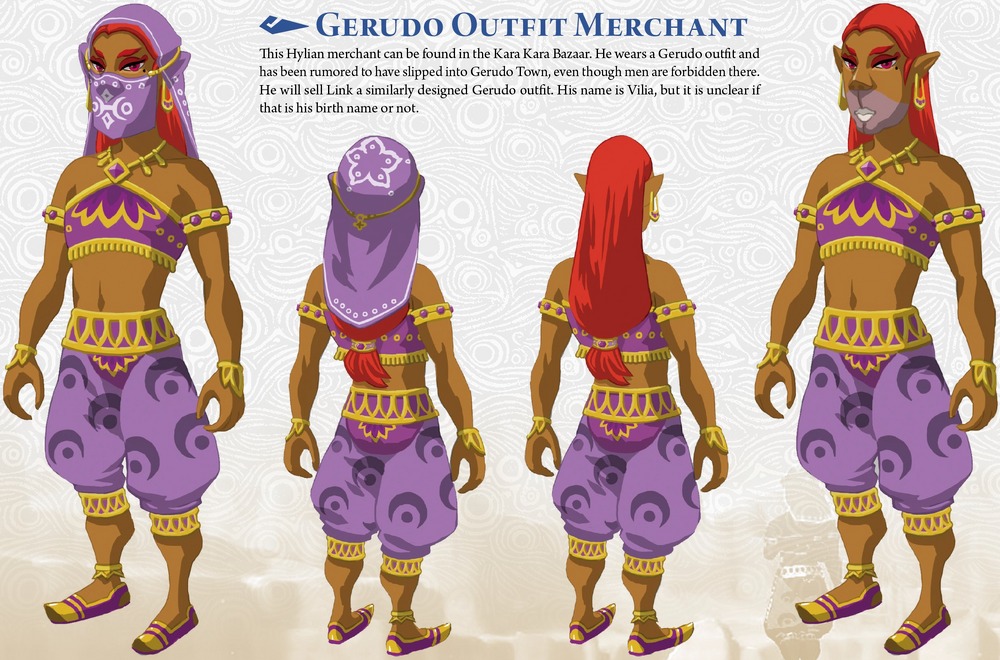
As amazing as Breath of the Wild is as a game, there is one hugely concerning factor regarding a specific character, not the character herself, but the way the game handles the NPC. I am, of course, talking about Vilia. As far as I can tell, Vilia is trans, which is fantastic to see in Zelda, let alone a Nintendo game, but the way the character is approached is done so in a rather transphobic manner, and it is another example of a trans person being the butt of a ‘joke’.
During Link’s adventure, he has to gain access to the Gerudo village, a village that can only be entered by women. While investigating ways to infiltrate the outpost, you hear some gossip that a man has somehow been able to sneak into Gerudo village. You soon find out that this was referring to Vilia, a character who identifies as a woman. When asked about a man who sneaks into Gerudo village, she denies that has happened, and you can either follow that up later by pretending to flirt with her or accuse her of being a man… something that a lot of TERFs do to a lot of trans people.
I’m going to be honest here: when I first encountered this sequence, my initial reaction was that Vilia was pretending to be a man and just trying hard to keep her ‘con’ going. I’m disappointed in myself that I even considered this, but it goes to show how easy it can be to inject something transphobic into a game without it being noticed by someone who was more ignorant of trans issues at the time.
Please check out this great video by Feminist Frequency. She explains the sequence in much better detail from a non-cis perspective and then talks about more issues throughout the history of gaming that are also worth listening to. Do be warned, however, that the video contains inappropriate language, and some of the games mentioned are unsuitable for younger audiences, so viewer discretion is advised.
Pokémon Series
As much controversy as Pokémon likes to attract, I found the series could be quite progressive at times regarding LGBTQ+ representation. Granted, there isn’t a lot; some parts may seem a bit of a stretch or appear to take a bit of a misstep, but it’s a lot better than some of the other game series under Nintendo’s belt.
Let’s start not with the games, but the cartoon series… more specifically, James from Team Rocket. Admittedly, James’ personality does seem to don the campy stereotype of homosexuality, but that’s still something I love about them. I also love how James is pretty comfortable with their body and doesn’t seem to care much about gender norms. Though James’ sexuality is never explicitly divulged, there are several moments throughout the series which could imply that the character could lie somewhere on the LGBTQ+ spectrum.

During his second theatrical outing in Pokémon The Movie 2000: The Power of One, a little interaction takes place that is sure to dampen the hopes of fans who often ‘ship’ Jessie and James. When Jessie says, ‘’Listen to me kid, when you get involved with the opposite sex you’re only asking for trouble.’’ James responds by saying how ‘’that’s the sort of trouble I [James] stays out of’’. This could signify that he generally doesn’t have any interest in women, it is important to note that he actually has been infatuated with the opposite sex on several occasions; he even had a bride-to-be, Jessebelle… but she was appointed to him by his parents so that doesn’t really count here. It may seem like I am clutching at straws here, but there are countless other references, behaviours, and nuances, specifically from James, that keep our hopes up!
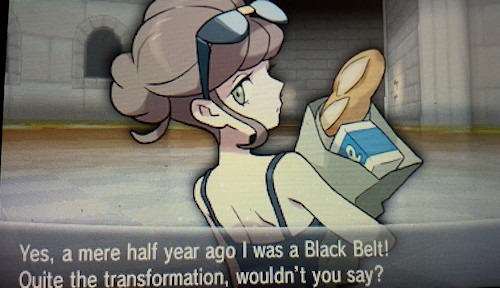
As theoretical as James’ sexuality goes, there is one character where proof of their LGBTQ+ identity has a bit more ground to stand on. In Pokémon X and Pokémon Y, you’ll encounter an NPC called Beauty Nova at the Kalos Battle Mansion. When interacting with her, she says the following:
English localisation
“Yes, a mere half year ago I was a Black Belt! Quite the transformation, wouldn’t you say?”
Japanese version
“I was a Karate King just half a year ago; the power of medical science is awesome, wouldn’t you say?!”
In the localised English version, she mentions that she was once a Black Belt, a type of trainer that is exclusively male, Battle Girls being the female equivalent. The wording here, topped off with ‘quite the transformation’, has had fans contemplating if Beauty Nova is trans; the mention of medical science in the Japanese version could be argued to support this too.
If Beauty Nova is trans, I think this is a nice bit of rep as far as trans characters go in Nintendo games. The game doesn’t rely on any transphobic stereotypes, and the way she talks about her history makes me feel that there is no stigma behind being trans in the Pokémon universe.
Fire Emblem Series
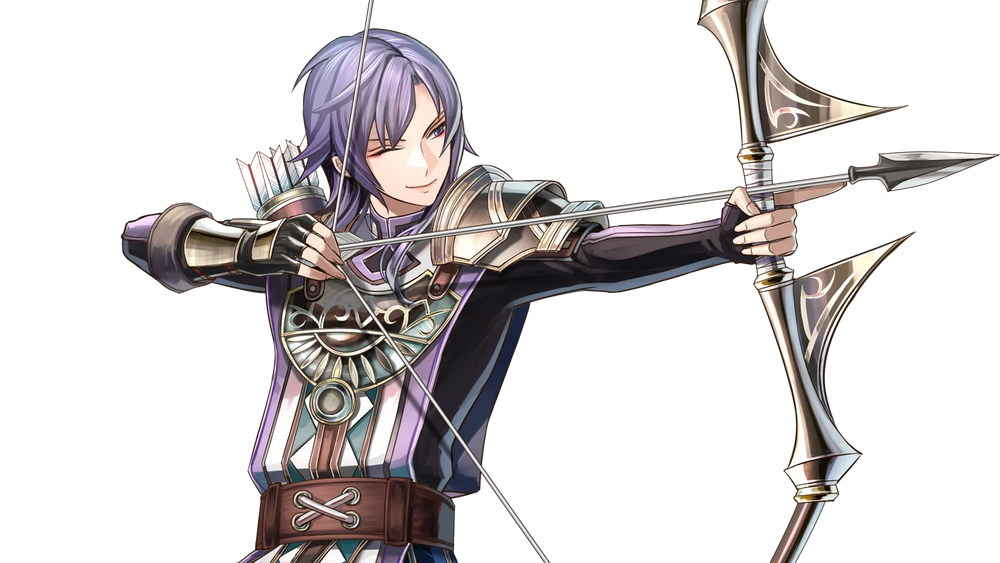
The Fire Emblem series has an abundance of LGBT characters, more than any other Nintendo game series as far as I am aware. Ironically, one of the very first inclusions is a character named Leon from Fire Emblem Gaiden, and its remake, Echoes: Shadows of Valentia. I first encountered Leon in Echoes, and playing a character who shares my name and is openly gay brought me a lot of joy and allowed me to connect with him more than others. I really hope he eventually found love that was unrequited.
More recently, Fire Emblem: Three Houses continued Awakenings’ trope, offering players a choice of who to romance. Though depending whether you chose the male-presenting or female-presenting Byleth would affect who you could potentially romance with, there are a few options for same-sex relationships, more than Fates at least. This did stir up a bit of controversy with there being more same-sex romance options being available for the female Byleth compared to their male counterpart, some saying that this potentially could be an example of fetishising lesbian relationships from the male gaze. However, by the time the final wave of DLC was released, the same-sex relationship options became much more balanced on both sides. I also think it’s worth mentioning that, from my perspective at least, Three Houses offers a fantastic example of bisexual representation, something that’s not acknowledged that well in media.

Animal Crossing Series
Animal Crossing typically doesn’t dabble in romance, focusing primarily on friendships and a sense of community, so it may come as a bit of a surprise with the game’s inclusion in this article. Either way, LGBT representation isn’t just about relationships; it can cover a wide variety of topics, including identity. I’ve already mentioned some examples earlier, but I feel Animal Crossing: New Horizons has a fantastic way of conveying this, more specifically, through character customisation.
The first time you boot up the game, Timmy and Tommy of Nook Inc. help you register your information, asking you to fill out your name and birthday and choose your appearance. Rather than explicitly asking if you are a boy or girl, like in previous entries, you’re asked to ‘choose your style’, providing a masculine and feminine option. What’s particularly interesting is that this choice doesn’t lock you out of customisation options for that style, including hairstyles, clothing, and makeup. This is a fantastic step in the right direction, allowing players of various identities to customise their characters to better represent their identity. In addition to this, you can change your ‘style’ at any point using a vanity or mirror. Imagine the joy this will bring to players exploring their own identity, knowing they can modify their in-game character to better relate to them. Best of all, your island’s inhabitants won’t treat you differently if you do re-customise your character.
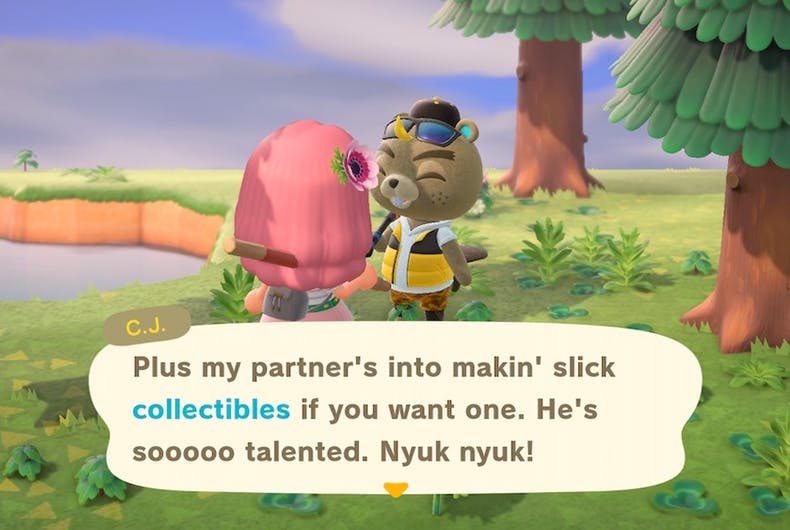
Though I did mention that Animal Crossing doesn’t really focus on relationships, there are a few characters who may hint towards relationships of their own. An evident example in New Horizons being Flick and CJ. Many fans have speculated whether or not the two may be an item, especially since CJ declares his admiration towards his ‘partner’, Flick, when he sends you your statue commissions. Regardless of this, the official Animal Crossing New Horizons Companion Guide states that they are simply ‘roomates and business partners’, shutting down the hopes of Animal Crossing’s first openly gay relationship. Some would even argue that this could be a form of queerbaiting, hinting towards LGBTQ+ representation without actually following through.
Interestingly, the Japanese dialogue refers to Flick (from CJ’s point of view) as a friend. Perhaps some of those on the localisation team had a different interpretation of the characters, but I suppose that’s something we won’t know for a while yet. I do find it a little humorous that this situation reminds me of the whole ‘they’re not gay, just really good friends/roommates’ trope. The fact that Flick and CJ are the only characters you can’t choose a roommate for when building their vacation home is worth noting. When picking either of them as a client, instead of letting you pair them with another villager, they’ll instead bring along Flick or CJ… just remember though, they’re only roommates!
Conclusion
These are just a handful of examples providing some form of LGBTQ+ representation. Many members of the community have grown up playing a variety of Nintendo games, myself included, so to experience any inclusion in one of their favourite series helps to bring a little more joy to our hearts. There are still various factors Nintendo can improve upon, such as a reliance on harmful stereotypes or queerbaiting, but I think it’s evident that Nintendo, and their supporting companies, are willing to become more progressive on this matter, which feels weird to say considering they patched out accidental same-sex relationships in Tomodatchi Life and doubled down on the fact that they do not intend this as an official feature in the game. I’ll be very interested to see what inclusion Nintendo will implement in the years to come.
Are there any other examples of LGBTQ+ representation in Nintendo games we haven’t mentioned? We’d love to see them, so be sure to let us know on social media!
Article Written by Leon Fletcher
Edited by Jen Griffiths
Header by Cheesu