
Core series in all but its core
Warriors’ action and Zelda’s adventure were once thought to an impossible mix, and many frowned at the debut appearance of Hyrule Warriors back on the Wii U. Those that gave it a shot were treated to a feast of fan service that paid strong homage to its source material, something developers Omega Force were always good at. Fast forward some years later, and the team gave us a sequel that was a little more closely tied to the then current lore of Breath of the Wild, yet was little more than fish bait that hooked fans eager for more calamity lore. The game strayed from its course and chose to be non-canon, earning mixed reception on its execution.
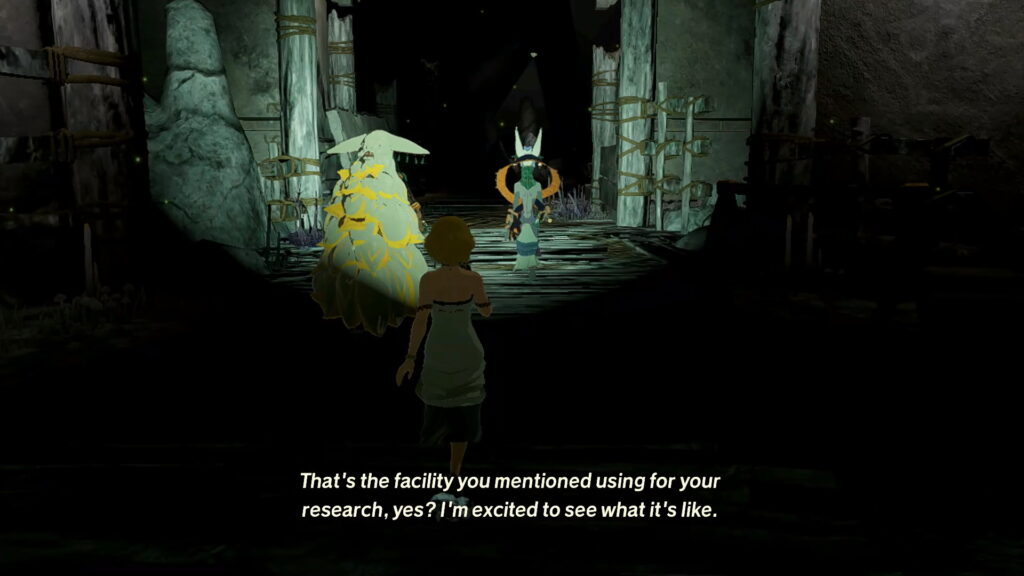
This is not the case with Hyrule Warriors: Age of Imprisonment, the third original game in the Hyrule Warriors series. The attachment to Tears of the kingdom is your barrier for entry this time, as the game stays strictly canon from start to finish and delivers the true story behind what happened while Zelda was in Hyrule’s past. This undoubtedly turns a few heads away as we already know how this story ends, but I can say with certainty that there’s enough new here for it to be worth playing. It isn’t an origin story, nor does it deliver any gasp-worthy revelations that’ll make you rethink Tears’ story, but it’s a tight enough adventure that core fans of the Zelda series who don’t quite gel with Warriors gameplay should seriously consider giving this one a look.
My reasoning here is quite frankly, Age of Imprisonment feels like a Zelda game in all but its core Warriors components. The voice cast all return, the graphics and art direction are straight out of Tears, and even the music ditches the wild, thrilling metal riffs of Warriors soundtracks in place of the ethereal piano and flutes of Tears. Collectable Koroks, weapon fusing with materials, Zonai devices with their limited battery; its all here, but used to blitz through hundreds of Bokoblins in hack ‘n’ slash gameplay rather than to solve puzzles on an adventurous journey.

There’s a far stronger effort than ever to combine these two wildly different aesthetics, and this time it works quite cleanly. Cutscenes are lengthy, but all carry the intrigue and emotion they need for a story as grim as Ganondorf’s advent in the Imprisoning War, helped greatly by the aforementioned soundtrack motifs. Naturally, some scenes are slightly altered versions of scenes from Tears (Ganondorf has lost his Disney villain smile, sadly), but seeing the buildup and aftermath of these key moments is almost what this game is for, and very rarely does it feel out of character for what the Zelda series usually entails. If you’re invested in the lore of the Switch Zelda games, you’re in for nothing but treats as the game shirks no details in treating itself as a sequel. There are even some rather beautiful moments where the game knows not to distract or dilute itself, where instead of fighting anything, you’ll be wandering fields or mysterious ruins as the story plays out in gameplay.
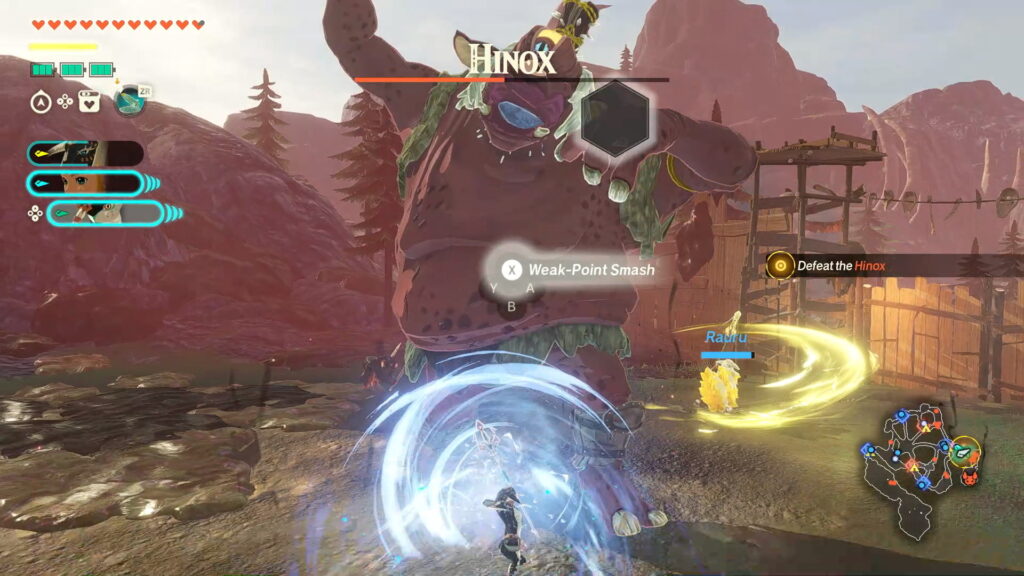
When it’s not being a main series Zelda game, almost all focus shifts to the Warriors gameplay. Each character combines light and strong attacks in unique ways to pull off stylish combos that rip through hundreds of enemies, as you trot through linear stages completing various mission objectives. It’s never anything more complex than defeating a specific strong enemy in a certain spot, or protecting members of Hyrule’s many armies against bosses, or sometimes both while adding a time limit for added pressure. Those strong enemies aren’t just souped-up versions of foot soldiers and are instead Zelda’s unique field bosses like Hinox, Stone Talus, and even Frox, complete with their weak spots and behaviours to exploit. Despite its simple basis, this is far from a mindless mash fest, as the bosses hit hard and must be handled with all the care they did in Tears.
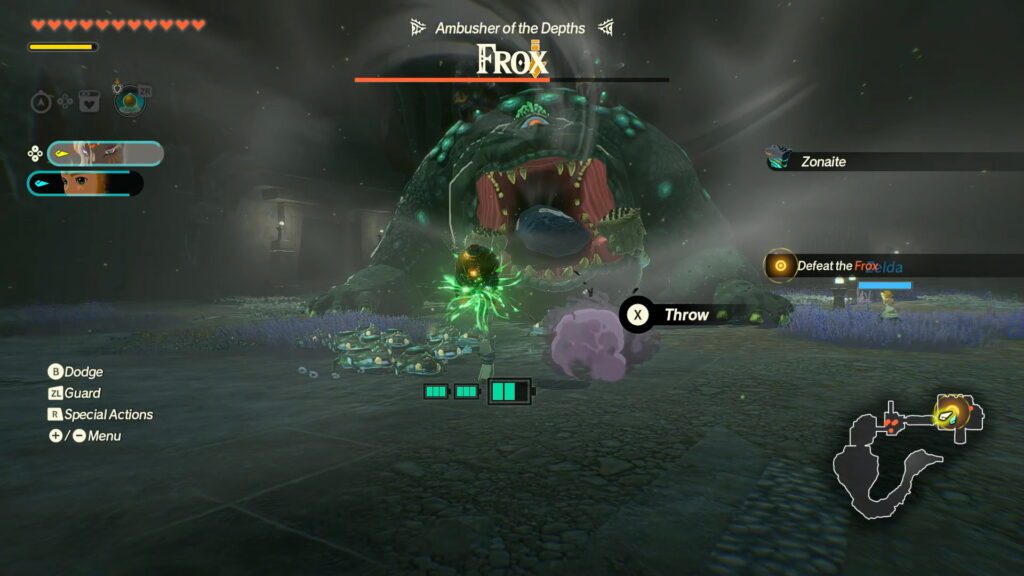
Using Tears of the Kingdom as a basis means all the complexity in that game’s combat system is adapted here. Many enemies have elemental variants or can even carry different weapons which change the way they fight and the way you approach them. This is where the aforementioned Zonai devices come in; they can be brought from the map screen, and once equipped, used in battle as long as you have the battery to spare. The battery thankfully charges over time, and can be charged instantly with consumables or pickups found around stages, justifying the crazy attack power these devices have. You’re really encouraged to use the dozens of tools at your disposal here, lest the game become harder than it is meant to. The point is, very few moments in the game are turn-your-brain-off moments like Warriors games often get boiled down to.
Between the surprising number of playable characters and the large variety of weapon types, Zonai devices, and elemental attributes to play with, rarely are two encounters the same, besides the myriad of side missions that reuse enemy types. Unfortunately, as systems have been borrowed by Tears, they also come with the inherent flaws they had back in the adventure game. You will be managing different gauges, consumables, characters and equipment on the fly almost constantly, and oftentimes that means pausing combat to flick through bloated menus as you carefully decide whether to equip a Bokoblin horn or a Lynel horn, or whether or not to use that precious resource on the current boss. This problem feels substantially worse here since this is a fast and frantic action game at its core. There is no split-second decision making, instead you must bring everything to a halt to re-quip yourself in the menus, which can no doubt get confusing to navigate as more and more Zonai devices, special attacks, and tools get added to your disposal. These materials are also used to complete quests and missions on the map screen, leading to character buffs, weapon unlocks, and other crucial features that make your life easier – ergo, you’re also balancing a want to save your resources, too.
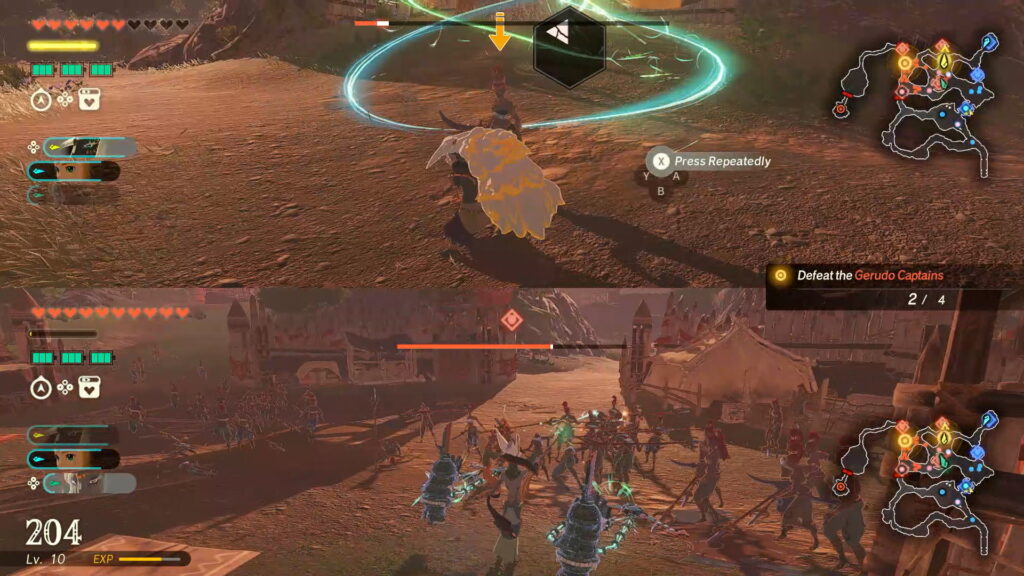
Engage with the game enough, and you may alleviate the problem in a significant way. The game warns you of what enemies to expect before you play a stage, while also giving a recommended level for characters. Characters level up from missions at an even rate, while you may pay in-game currency to boost the levels of underused characters to avoid having to grind them. Certain materials can even be purchased, while some materials can be used to upgrade weapons. The weapon upgrade feature feels a little tacked on as the bonuses earned from it are so miniscule that they cannot be felt, yet it all feels like something that may punish one should they choose to ignore it. With all this worrying about materials, eventually the map screen becomes its own cluster of chores and buttons to click as you stress over numbers and what commodities to farm next.
All of this would serve to bog down the experience if only the game wasn’t so delicately engaging in everything it does at its core. You’ll be using each character’s signature attacks more than you will equipment; moves made to counter bosses when they use certain telegraphed attacks. Counter these successfully, and the boss will be stunned for you to whittle away at a weak-point gauge, which when depleted, allows you to chunk at their health with a cinematic weak point-slash. That’s not a replacement for your series staple Musou attack however, which can not only nuke a surrounding area with high damage, but just as suitably knock a boss down for more weak-point damage. You’re never fighting alone, either – if you and a CPU controlled ally are nearby and their sync gauges are full, you can team up for a delightfully devastating sync strike, which will require some quickfire aiming or inputs to maximize the damage of.
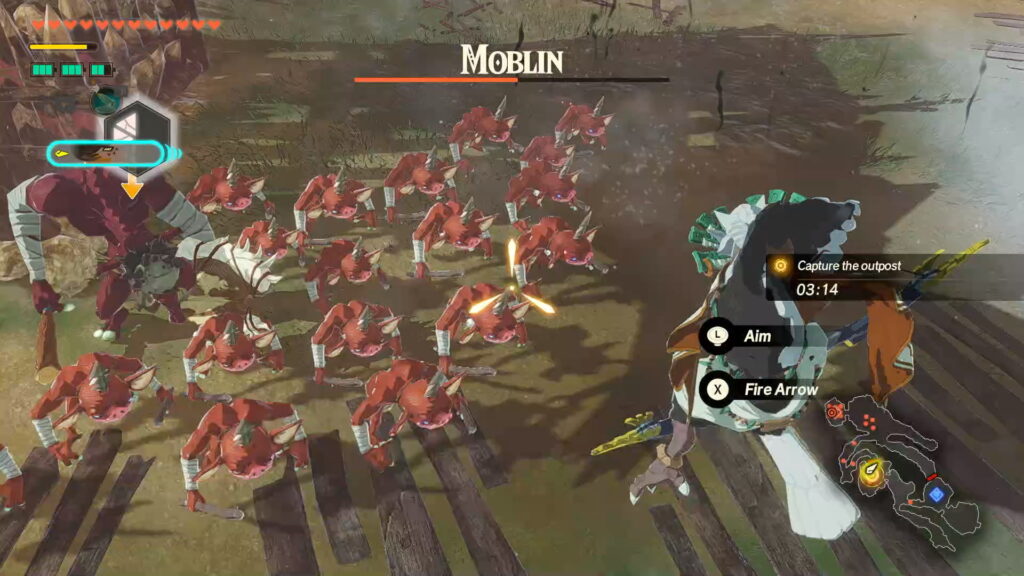
All of this is presented in the way Omega Force does best. Age of Imprisonment is a very cool game and none of its grim script will take away from that. It’s never unsatisfying to high five Mineru, charge up her construct with Zelda’s magic, smack some enemies around, and then pelt them with an over-the-top number of Zonai rockets. Many such animations fill combat with energy and add a tireless satisfaction to defeating bosses, especially when they come after a lengthy challenge of timed dodges and counters. And best of all: the Switch 2 gets to flex its stuff by handling all this at a fluid, perfectly stable 60fps whether handheld or docked. Gone are the choppy performance woes of Age of Calamity; this game looks beautiful, colourful, and flashy no matter where you are. Its missions are a little long for out and about play sessions, but that doesn’t take away from the technical achievement of looking this good on a handheld while having so much on screen at once. You can even play two-player couch co-op confidently, as although it locks the frame rate to 30fps, it is once again stable and refuses to chop at any moment. Warriors games are always a top tier couch co-op experience, and this game continues that tradition.
It would be a flaw not to mention the Mysterious Construct and Calamo characters, and what they bring to the experience. Link is not playable in this game and so the excuse to get his gameplay style here is a new duo of a Construct and a Korok searching for a new home while protecting their land. Here is where most of the weapon fusion mechanics take place, as the Mysterious Construct fights with blatantly reused animations from Link’s previous Hyrule Warriors outings, combined with new lore-related abilities. The duo brings some much-needed charm to the plot, while also being serious enough that their lines aren’t out of place or groan humour. More importantly, they bring unique flight battles – if anyone ever enjoyed Kid Icarus Uprising on the 3DS, rejoice, for this game has sections that almost feels like a ‘what if it was on Switch’ scenario of that game’s air battles, and are some of the coolest moments in Age of Imprisonment. Their controls are a little finnicky, but add much welcome arcade style action to break up the gameplay routine. Every flight battle always had me smiling from start to finish.
Verdict
Age of Imprisonment is a game that knows what it is and doesn’t stray from that path. It’s a main series Zelda sequel in all but its core. When it needs to be, it’s a magical adventure through Hyrule’s past amidst a war, with all the emotional beats and dramatic struggles a story in the Breath of the Wild timeline deserves. When it gets to its core, it’s a Warrior’s game carefully mixed with the boss design philosophy of Zelda tradition that rewards skill and engagement in a way that frequently exceeds expectations. If you can get past its bloated menus and number-crunching RPG filler, Zelda fans are looking at an unforgettable depiction of The Imprisoning War, while Warriors fans are treated to one of the most unique and engaging games of the genre yet.
Where to Buy
- Amazon UK
- Price: £43.96
- Link: https://amzn.to/4ceXvVJ
- Nintendo Store
- Price: £58.99 (Physical)/ £66.99 (Digital)
- Link: https://nintendo-uk.pxf.io/KBGWKx
#AffiliateLinks – Prices correct at time of publishing.
Credits
Written by Sheldon Greenaway
Edited by Mark McAllister
Graphic Template by Paul L. Russell
A copy of this game was provided by the publisher for this review.